Beginner Guides

    The Visual Guide to Spotting Top-Shelf Cannabis and Avoiding the Trash

    Last updated: 3 min read
    The Visual Guide to Spotting Top-Shelf Cannabis and Avoiding the Trash - cannabis education article cover
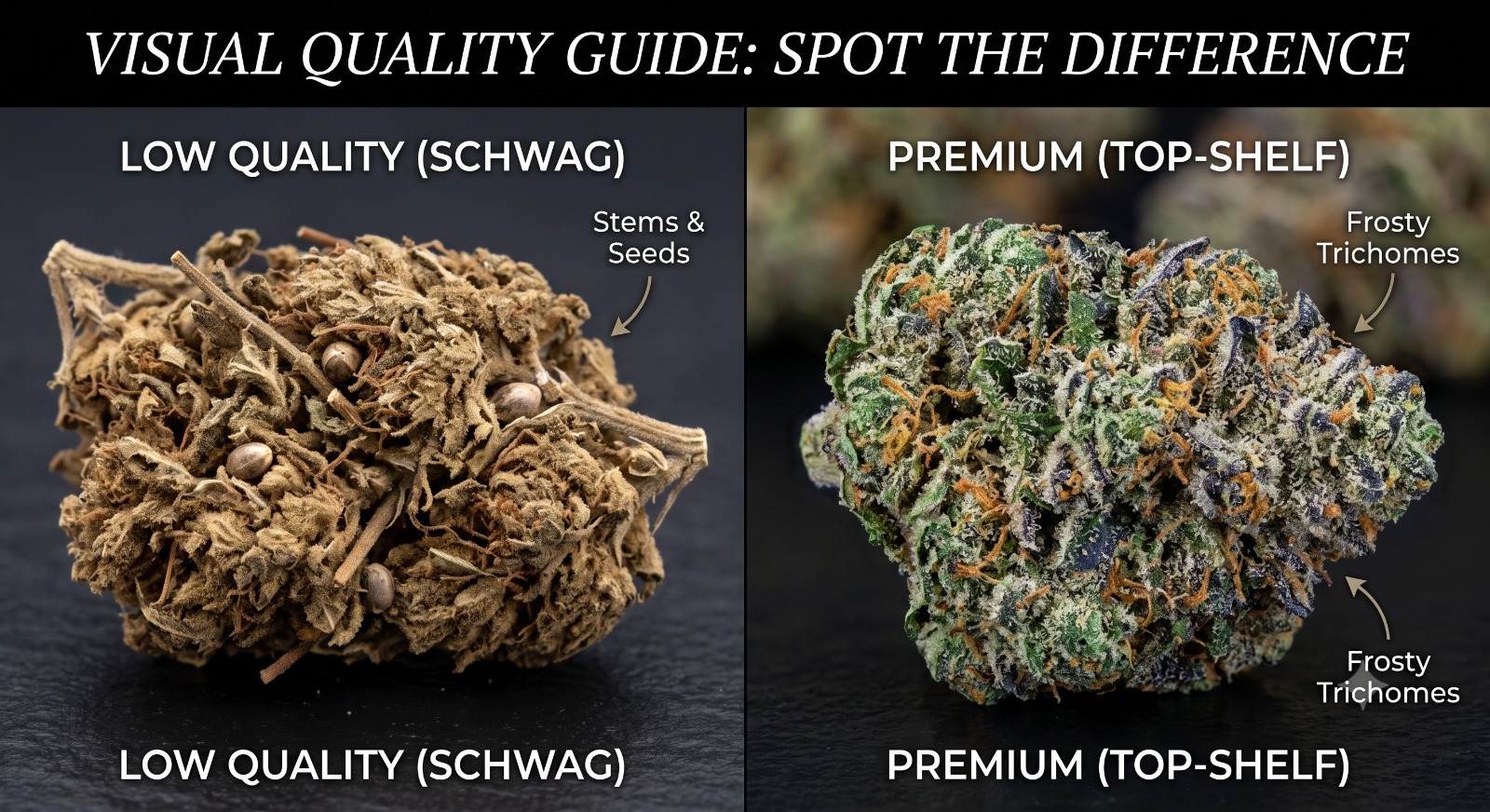
    Side by side comparison showing dark brown, compressed, low-quality cannabis next to bright green, frosty, high-quality cannabis

    Walking into a dispensary or looking at a fresh batch can feel a bit like buying a used car. Everything looks shiny under the right lighting, but how do you know if you're getting a high-performance machine or a absolute lemon?

    Luckily, you don't need a lab coat or a chemical analysis to spot the difference between premium flower and "schwag" (low-quality weed). Your eyes can do most of the heavy lifting. Here is a quick, painless guide to evaluating your cannabis visually like a seasoned pro.

    1. The Color Test: Vibrant vs. Vanished

    The easiest thing to spot immediately is the color palette. High-quality cannabis should look alive. Look for deep greens, bright greens, and secondary flashes of purple, orange, or even deep blue. If the flower looks completely brown, yellow, or a dull, dusty gray, it's a massive red flag. Brown weed usually means it is ancient, poorly cured, or has suffered from heat stress and oxidation.

  1. Good: Bright greens, fiery orange hairs, hints of purple or pink.
  2. Bad: Dull browns, muddy yellows, or a bleached white appearance (which can happen from light burn during growing).
  3. 2. The Frost Factor: Trichomes Are King

    If you look closely at premium cannabis, it looks like it survived a miniature snowstorm. Those tiny, glittering crystals are called trichomes. They aren't just there for decoration, trichomes are the microscopic factories that produce the cannabinoids (like THC and CBD) and terpenes (the aromas).

  4. A top-shelf bud will be absolutely blanketed in these sticky little crystals. Bad weed, on the other hand, will look bald, dry, and distinctly lacking that frosty shimmer.
  5. Pro Tip: Look for the little "mushroom heads" on the crystals if you have a magnifying glass or a good phone camera. If the heads are intact and look milky-white or amber, you've hit the jackpot. If they're missing or clear, the flower was harvested too early or handled roughly.
  6. 3. The Anatomy Check: Structure and Trim

    How the bud is shaped and trimmed tells you a story about how much care went into growing it.

  7. Top-Shelf Structure: Premium buds are generally dense, tightly formed, and neatly trimmed. A master grower takes the time to carefully snip away the excess "fan leaves" that don't contain much THC, leaving you with pure flower.
  8. Low-Shelf Structure: Poorly grown cannabis often looks loose, wispy, and airy (sometimes called "larfy"). If the bag is full of large stems, loose seeds, and crunchy, dead leaves, it’s a sign of low quality. Seeds are a particular bummer because they mean the plant spent its energy making babies instead of maximizing potency.
  9. By keeping an eye out for vibrant colors, a thick frost layer, and a clean, seed-free trim, you can easily steer clear of the bad batches and make sure you're getting exactly what you pay for.

    Frequently Asked Questions

    What does it mean if my weed has a lot of seeds?

    Seeds mean the female cannabis plant was pollinated during growth. Instead of spending its energy producing THC and rich terpenes, the plant spent its energy making seeds. It generally indicates lower potency and a harsh smoke.

    Are purple cannabis strains always better than green ones?

    Not necessarily. While a vibrant purple color looks stunning and indicates a high concentration of anthocyanins (natural pigments), it doesn't automatically guarantee higher potency or a better experience than a vibrant green bud. Stick to checking the trichome density.

    Can you smoke brown or yellow weed?

    You can, but it likely won't be a great experience. Brown or yellow flower is usually old, degraded, or dried out. The THC has likely broken down over time, resulting in a harsher taste and a much weaker, more sedative effect.

    Share this article

    Further Reading