Rolling a joint is an art form, and every true artist knows that the canvas matters just as much as the paint. If you’ve ever stared blankly at the wall of rolling papers at your local smoke shop, you’re not alone. With so many types of joint papers on the market, picking the right one can feel overwhelming.
But fear not! Whether you want a slow burn, zero flavor interference, or just something that won’t tear when you look at it funny, we’re here to help you navigate the wonderful world of rolling papers.
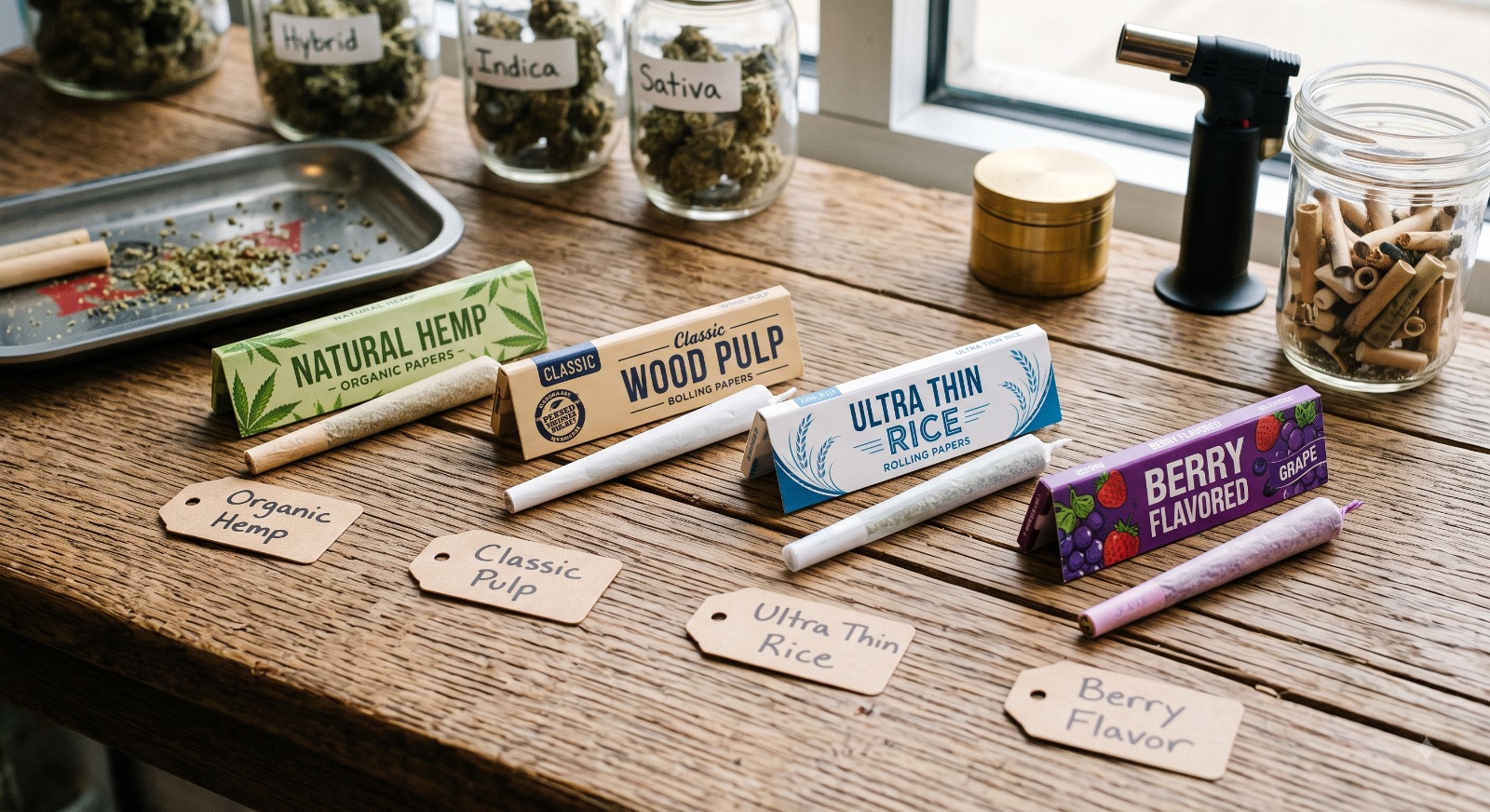
1. Wood Pulp: The Old Reliable
Think of wood pulp papers as the training wheels of the rolling world. They are the classic, traditional papers that have been around for over a century. Because they are thicker and have a bit of texture, they are incredibly easy to grip, tuck, and roll. They also stay lit easily.
The Catch: They burn a bit faster and produce more ash. If you are a flavor purist, you might notice a slight papery aftertaste.
2. Hemp: The Crowd Favorite
If there’s a goldilocks of rolling papers, it’s hemp. Made from organic hemp fibers, these papers are environmentally friendly and offer a fantastic middle ground. They are thin enough to let your herb shine, but thick enough to provide a solid grip for rolling.
The Catch: They have a mild, earthy taste. Luckily, most people find that this flavor beautifully complements the natural taste of their herbs.
3. Rice: The Purist’s Choice
Want to taste exactly what you put inside your joint and nothing else? Rice papers are your best friend. They are ultra-thin, burn incredibly slowly, and produce almost zero ash.
The Catch: Because they are so thin and smooth, they can be slippery and frustrating for beginners to roll. Also, if you take a break from puffing, a rice paper joint will likely go out on its own.
4. Novelty & Flavored Papers
Feeling festive? Flavored papers (think grape, blueberry, or cotton candy) can add a fun twist to a casual session. You can also find transparent cellulose papers that let you see your herb, or even 24-karat gold papers for when you’re feeling excessively fancy.
The Catch: These are mostly for the novelty factor. They often contain extra chemicals or sugars, and they usually don't offer the smoothest or most even burn.
The Verdict
The "best" paper completely depends on your vibe. Beginners should stick to wood pulp or hemp for a frustration-free roll. Connoisseurs who have mastered their technique usually gravitate toward rice papers for the purest flavor. Experiment, have fun, and happy rolling!