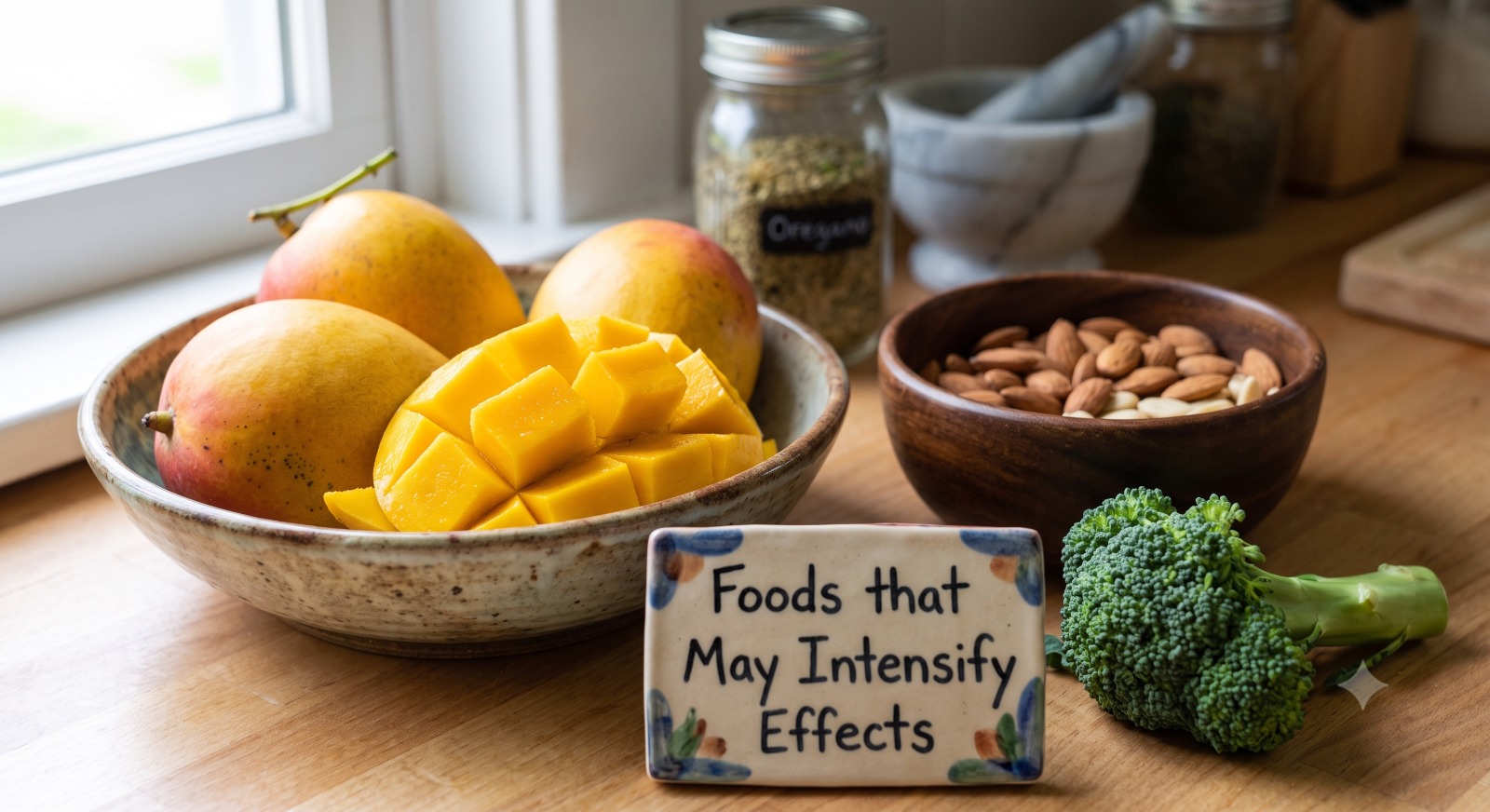
Ever wonder why a mango feels like a secret weapon on smoke night?
Turns out, the humble tropical fruit is packed with myrcene, a terpene that helps THC cross the blood-brain barrier faster, which means your high hits harder and lingers longer. Cannabis culture has quietly built a whole science around pairing food with a high, and once you know the mechanics, it's hard not to raid the kitchen strategically.
The Terpene and Fatty Acid All-Stars
Nature apparently has a soft spot for stoners, because several everyday foods double as high-boosters through very specific biological pathways:
1. Mangoes: myrcene-rich fruit that increases blood-brain barrier permeability, letting more THC reach the brain for a stronger, longer-lasting effect
2. Nuts like almonds, cashews, and walnuts: loaded with omega-3 fatty acids that bind to cannabinoids and help ferry them through the bloodstream and across the blood-brain barrier faster
3. Broccoli: contains beta-caryophyllene, a terpene that locks onto cannabinoid receptors directly, which can also enhance anti-inflammatory and pain-relief effects alongside the high itself
4. Eggs: another omega-3 powerhouse that speeds up THC absorption in a similar way to nuts, making effects come on quicker
5. Apples: hide a flavonoid called kaempferol that temporarily blocks the enzyme (FAAH) responsible for breaking down anandamide, the body's own "bliss molecule," giving a subtle mood boost
6. Fatty fish like salmon and sardines: omega-3s here support the endocannabinoid system more broadly, making the body more receptive to THC overall
7. Coconut oil: its high saturated fat content bonds well with cannabinoids, which is why it's a favorite base for infused edibles looking to pack a punch
8. Alcohol: even small amounts have been shown to raise THC concentration in the blood, creating the well-known "cross-fade" effect where both substances amplify each other
Timing Is Everything
The order and timing of eating relative to smoking actually changes the outcome. Eating mangoes or omega-3-rich foods roughly an hour before lighting up tends to prime the body's cannabinoid receptors in advance, setting the stage for a stronger effect once THC arrives. Foods like nuts or eggs, on the other hand, work best eaten during or right after consumption since they speed up absorption of THC that's already circulating. Some experienced users skip food entirely and just drink water, since an empty stomach lets THC absorb into the bloodstream faster for a quicker, sharper initial hit.
Why the Fridge Suddenly Looks So Appealing
Here's the twist: THC doesn't just make food taste better, it actually rewires appetite signals in the brain. The compound stimulates hunger by interacting with cannabinoid receptors involved in appetite regulation, pushing people toward sugary, salty, carb-loaded snacks rather than balanced meals. This is the famous "munchies" effect, and it's driven more by a general spike in appetite than by any deliberate effort to boost the high itself.
The numbers back up just how real this craving is. A controlled study had volunteers live in a residential lab for 13 days while researchers tracked their food intake, and smoked marijuana was found to increase daily caloric consumption by roughly 40%, driven mainly by extra snacking rather than larger meals. So the stereotype of stoners raiding the pantry at midnight isn't just a joke, it's backed by actual metabolic science.
The Takeaway
So next time the munchies strike, you can blame biology rather than willpower. Mangoes, almonds, and broccoli are basically nature's high-octane fuel for a cannabis experience, while THC itself is quietly rewriting your brain's hunger signals in the background.
One important caveat worth remembering: this is all educational context, and marijuana remains illegal for recreational use in India, with legal status varying widely from country to country.