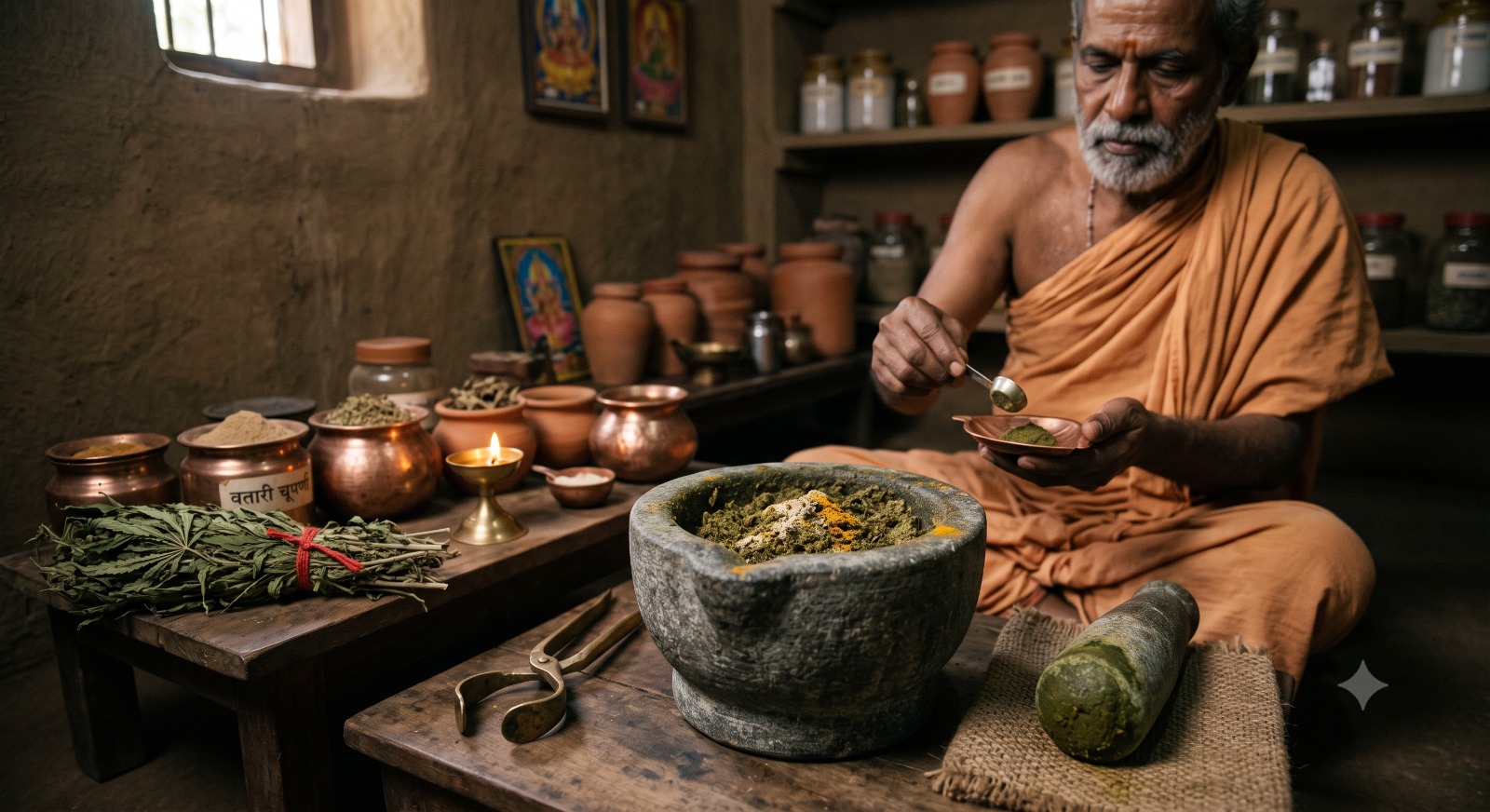
Marijuana (known in Ayurveda as bhanga, ganja and vijaya) has been used for centuries as a carefully controlled medicinal and ritual herb rather than a casual intoxicant. Classical Ayurvedic texts describe in detail where it should be used (digestive, pain, neurological, reproductive and psychological conditions), and how it must be purified, processed and dosed to avoid toxicity and dependence.
How Ayurveda classifies cannabis
Ayurveda typically places bhanga in the category of upavisha - “sub‑toxic” herbs that have strong medicinal value but can cause harm if misused. Classical descriptions say bhanga is bitter in taste, light and penetrating in quality, hot in potency, kapha‑reducing, but pitta‑aggravating, and capable of powerfully stimulating digestion and the mind. It is described as madakrut (intoxicating), nidrakara (sleep‑inducing), grahi (absorbent), pachani (digestive), and kamada / kama‑uddeepana (libido‑enhancing), showing why Ayurveda treats it as both medicine and potential poison.
Internal medicinal uses: digestion and metabolism
Many classical and modern Ayurvedic sources highlight bhanga as a deepana (digestive fire‑enhancer) and pachani (digestive) herb.It is used in small, purified doses to treat low digestion strength, loss of appetite, dyspepsia (ajirṇa), irritable bowel syndrome, diarrhoea (atisara) and intestinal colic. Some nighantus (materia medica texts) describe it as karshani (weight‑reducing), helpful in obesity by improving metabolism and reducing excessive kapha.
Internal uses: neurological and mental disorders
Ayurvedic descriptions mention bhanga as medhya (supporting intellect), rasayana (adaptogen), and useful in managing certain neurological and psychiatric conditions when strictly supervised. In small doses, it is cited for conditions like convulsions, epilepsy, schizophrenia symptoms (especially excessive talk), anxiety and insomnia, reflecting its sedative and mind‑altering properties. Modern Ayurvedic reviews echo older texts by emphasising its role in pain modulation and central nervous system disorders, while warning about addiction and cognitive side effects with improper use
Internal uses: pain, inflammation and fever
Cannabis is repeatedly mentioned as a potent analgesic in Ayurvedic literature, used for muscle pain, joint pain, colicky pain and chronic pain syndromes. Review articles on bhanga in pain management describe traditional formulations where it helps relieve inflammatory pain, tetanus‑like rigidity (dhanustambha), renal colic and certain types of headache. Texts also note its febrifuge (anti‑fever) qualities, mentioning recipes where bhanga is combined with other herbs to bring down high body temperature and improve comfort.
Internal uses: urinary and reproductive health
Ayurvedic sources describe bhanga as increasing urine flow (mutra pravṛtti) and relieving conditions such as painful or blood‑tinged urination (rakta mutra).It appears in formulations for erectile dysfunction (dhvajabhanga), premature ejaculation (shukra‑stambhana), nocturnal emission (svapna‑meha) and low libido, combining its aphrodisiac warmth with its calming effect. Because of its dual impact on sexual drive and nervous system, texts warn that dosage, timing and purification must be carefully controlled to avoid dependence and exhaustion of reproductive tissues.
Spiritual and ritual dimensions
Vedic and later texts portray bhanga as a sacred herb that supports meditation, courage and relief from sorrow when used with discipline and devotion. Associations with Shiva encouraged its use among ascetics and yogis, who believed it helped withdrawal from worldly distractions and sustained long periods of contemplation. At the same time, many authors stressed that bhanga should not be abused, repeatedly warning that unrestrained consumption leads to confusion, lethargy and spiritual decline rather than liberation.
Modern Ayurvedic view and legal context
Modern Ayurvedic textbooks rarely include cannabis in routine practice, largely due to legal restrictions and the stigma created by 20th‑century prohibition.Many contemporary practitioners either omit it from classical formulas or replace it with milder herbs, even though they acknowledge its historic role and therapeutic potential.Recent Indian and international research on medical cannabis and CBD has re‑sparked interest in its pain‑relieving, anti‑spasmodic and neuroprotective effects, but responsible authors emphasise that any use should stay within legal boundaries and under qualified medical supervision.
Risks, side effects and Ayurvedic cautions
Ayurveda is unusually honest about the double‑edged nature of bhanga, documenting both benefits and harms. Side effects described include intoxication, memory problems, anxiety, hallucinations, digestive upset, pitta aggravation, dependence and social dysfunction when taken in excess or without purification.Therefore, classical guidance can be summed up in three points: use only purified cannabis, always in small doses, for specific indications, and never as a casual recreational drug.