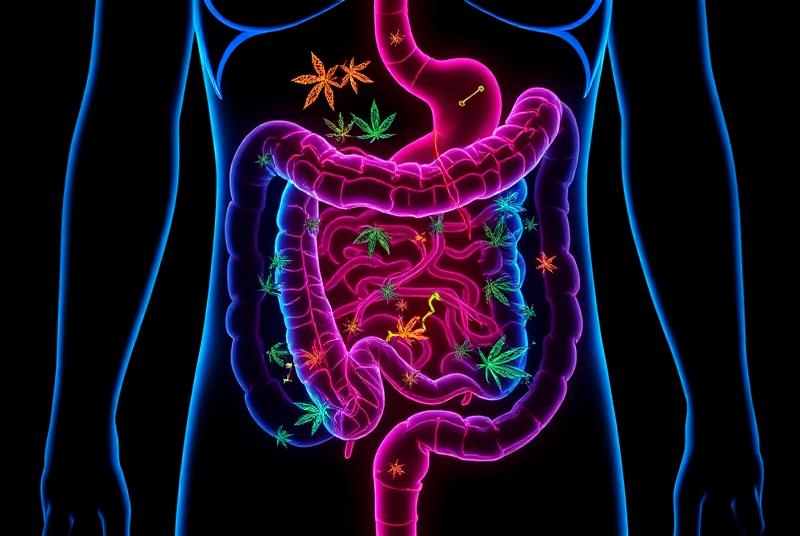
The gut contains its own nervous system. The enteric nervous system has hundreds of millions of neurons, enough to run digestion largely independently, and it is richly supplied with cannabinoid receptors.
CB1 receptors sit on enteric neurons, where they regulate motility and secretion. CB2 receptors sit largely on gut immune tissue, which is substantial given how much of the immune system lives in the intestinal wall. The endocannabinoid system helps regulate transit speed, secretion, visceral pain sensitivity and inflammation.
Slowed Transit Is the Central Effect
CB1 activation reduces gut motility. Practically, cannabis slows things down, and most of its gastrointestinal effects follow from that.
That single mechanism explains why cannabis appears helpful in diarrhoea-predominant conditions and unhelpful or harmful in constipation-predominant ones.
Irritable Bowel Syndrome
IBS involves abdominal pain and altered bowel habit without structural disease, and current understanding centres on visceral hypersensitivity and gut-brain axis dysregulation rather than damage.
That framing makes cannabinoids a reasonable candidate, and it connects to the clinical endocannabinoid deficiency hypothesis, which proposes reduced endocannabinoid tone as a contributor to IBS, migraine and fibromyalgia. The hypothesis is plausible and not established.
Evidence in IBS is limited. Studies of dronabinol have reported effects on colonic motility, without convincing evidence of symptom benefit, and some findings suggest genetic variation in endocannabinoid-related genes influences response. There are no adequately powered trials supporting cannabis as an IBS treatment.
Subtype matters practically. For diarrhoea-predominant IBS, slowed transit works in the right direction. For constipation-predominant IBS, it works against you.
The Gut-Brain Axis
IBS and functional gut disorders involve bidirectional signalling between gut and brain, which is why psychological therapies including gut-directed hypnotherapy and cognitive behavioural therapy have genuine evidence, and why anxiety worsens symptoms.
Cannabis acts on both ends of that axis, reducing anxiety at low doses and altering gut motility and visceral pain perception directly. That dual action is part of why people report benefit, and it means some of the benefit may be anxiolytic rather than gastrointestinal.
The Microbiome
Cannabis and the gut microbiome is an active research area and currently produces more speculation than knowledge. Animal work has reported changes in microbial composition with cannabinoid exposure, and the endocannabinoid system does interact with microbial signalling and gut barrier function.
Human evidence is minimal. Claims that cannabis or CBD improves the microbiome or repairs leaky gut are not supported.
Cannabinoid Hyperemesis Syndrome
Any discussion of cannabis and the gut has to include this, because it is the most consequential gastrointestinal effect of heavy use and it gets missed for years.
The pattern is cyclical severe nausea, intractable vomiting and abdominal pain in someone with long-term heavy use, frequently daily use over years. A distinctive feature is compulsive hot bathing, which patients find relieves symptoms temporarily. Episodes can cause dehydration requiring intravenous fluids.
It is missed because the patient uses cannabis for nausea, so it looks like the treatment rather than the cause, and because extensive gastrointestinal investigation typically finds nothing. Symptoms resolve within days to weeks of stopping and return on resuming, which is effectively diagnostic. Standard antiemetics often work poorly, and topical capsaicin on the abdomen has been reported to help acutely.
Other Considerations
Bottom Line
The gut has a dense cannabinoid receptor network, and CB1 activation slowing motility explains most of what cannabis does there. That helps diarrhoea-predominant conditions and worsens constipation-predominant ones. IBS is a reasonable candidate on gut-brain grounds without trial support, microbiome claims are unsupported, and cannabinoid hyperemesis syndrome is the complication of heavy use that deserves recognition.
Disclaimer: This article is for educational purposes only and does not constitute medical advice. Always consult with a qualified healthcare professional before making any health-related decisions.