By Joint Valley Research Team Last updated: 3 min read
Cannabis: Benefits, Myths & Risks
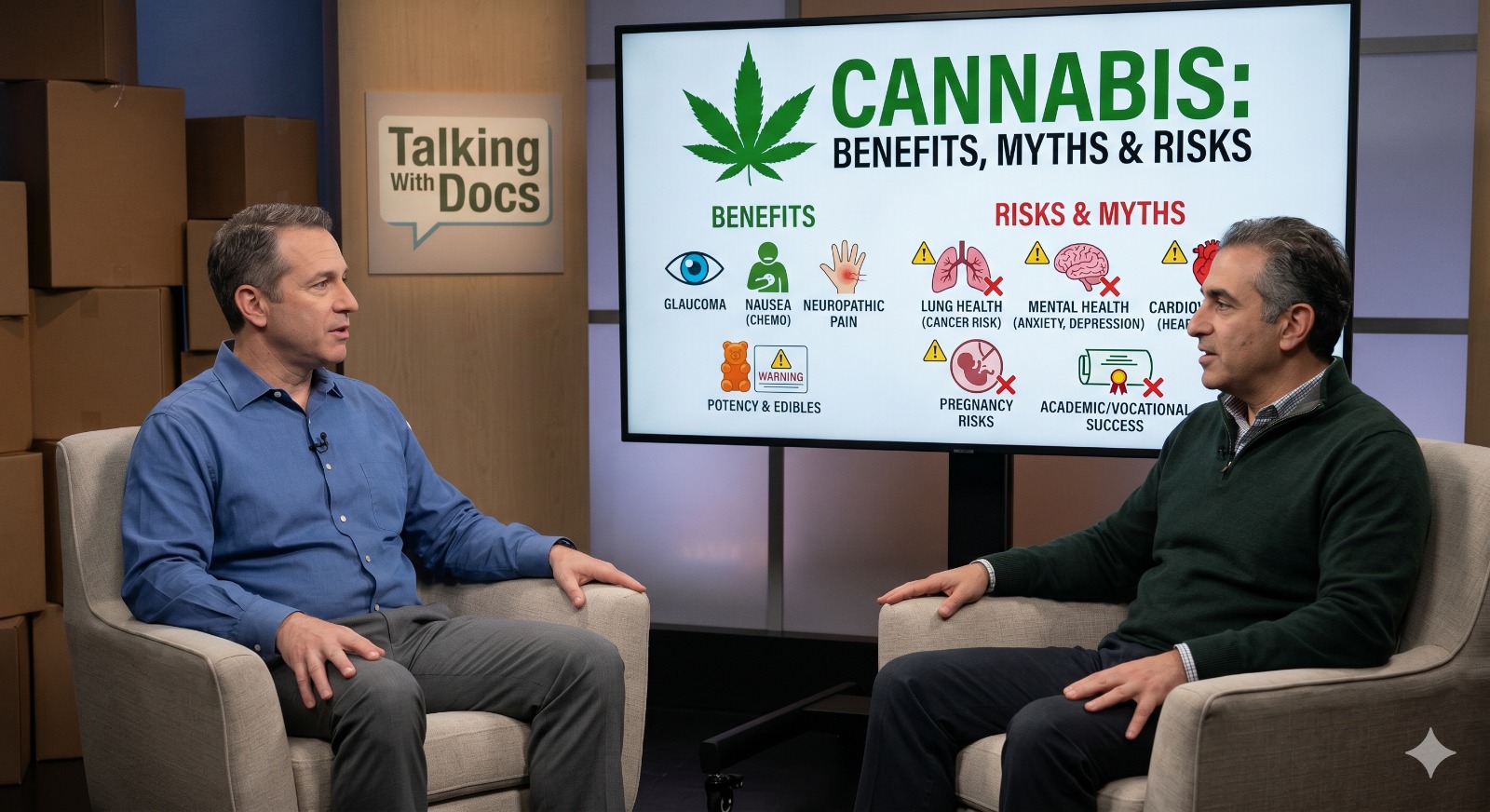
Talking With Docs breaks down the medical reality of cannabis use. Dr. Brad Weininger and Dr. Paul Zalzal explain that while cannabis has shifted from the streets into legitimate medical prescriptions, it is a misunderstanding to treat it as entirely "healthy."
The medical insights, misconceptions, and newly studied risks discussed in the video include:
1. Proven Medical Benefits
While not considered an everyday wellness supplement, the medical literature does support three primary benefits:
Glaucoma: It effectively helps reduce intraocular (fluid) pressure in the eyes.
Severe Nausea: It is highly regarded by patients for suppressing severe nausea and vomiting induced by cancer chemotherapy.
Neuropathic Pain: It provides relief for stubborn nerve pain and arthritis, often managed using CBD rather than the psychoactive THC component.
2. Mental Health & Brain Development
A major myth is that cannabis cures daily mental wellness struggles. The doctors point out that:
Brain Maturity: The human brain develops until about age 25. Regular use before this age alters three critical regions: the prefrontal cortex (decision-making), hippocampus (memory creation), and amygdala (emotional regulation) .
Anxiety & Depression: While users may feel short-term relief while high, long-term studies demonstrate that regular cannabis use actually increases overall anxiety and depression .
Psychosis & Schizophrenia: For individuals with a genetic or family predisposition, cannabis significantly raises the risk of triggering severe, irreversible psychotic episodes or schizophrenia.
3. Physical Health Risks
Aggressive Lung Cancers: Even when used without tobacco, inhaling superheated cannabis smoke releases volatile toxins. Recent data links regular smoking to aggressive lung cancers striking at younger ages.
Pregnancy Complications: Cannabis crosses the placental barrier, leading to risks of pre-term birth, lower birth weight, and direct drug exposure to a fetus's developing brain.
Cardiovascular Events: The hosts highlighted a substantial March 2025 study from the Journal of the American College of Cardiology (JACC) analyzing over 4 million people under 50. It showed that when matched against non-users, cannabis users experienced a 6x increase in heart attacks, a 4x increase in strokes, and a 2x increase in congestive heart failure.
Hyperemesis Syndrome: Chronic heavy users can develop paradoxical, severe, uncontrollable nausea and vomiting, which only resolves 5 to 6 weeks after quitting entirely.
4. Modern Market Realities
Skyrocketing Potency: In the 1970s and 1980s, the concentration of psychoactive THC in cannabis hovered around 2% to 8%. Modern strains and concentrates reach as high as 35%, making it up to 15 times stronger than what was consumed decades ago .
The Threat of Edibles: Candies, gummies, and baked goods look identical to everyday sweets. This has caused a drastic spike in accidental pediatric overdoses, requiring parents to treat these items like locked prescription medication .
The doctors emphasize that legalization does not automatically make a substance safe, and users should approach cannabis with the same medical responsibility and caution as alcohol or any other powerful pharmaceutical.
Frequently Asked Questions
What are the only proven medical benefits of cannabis
According to clinical literature, cannabis has three primary, well-documented medical applications: reducing fluid pressure in the eyes for glaucoma patients, suppressing severe nausea and vomiting caused by cancer chemotherapy, and managing stubborn neuropathic (nerve) pain or severe arthritis.
Does cannabis help cure or reduce anxiety and depression?
While users often report feeling short-term relaxation or relief while under the influence, long-term psychiatric data shows the exact opposite. Regular cannabis use is clinically proven to increase the baseline risk of developing chronic anxiety and depression.
Is smoking cannabis safer for the lungs than smoking cigarettes?
While cannabis smoke lacks some of the specific chemicals found in commercial tobacco, inhaling any superheated, combusted organic matter introduces volatile toxins into the lungs. Growing evidence shows that regular cannabis smokers face a distinct risk of developing aggressive lung cancers at a much younger age than typically seen.
Share this article
About the Author
Joint Valley Research Team
Our research team comprises cannabis educators, medical professionals, and science writers dedicated to providing accurate, evidence-based cannabis information.