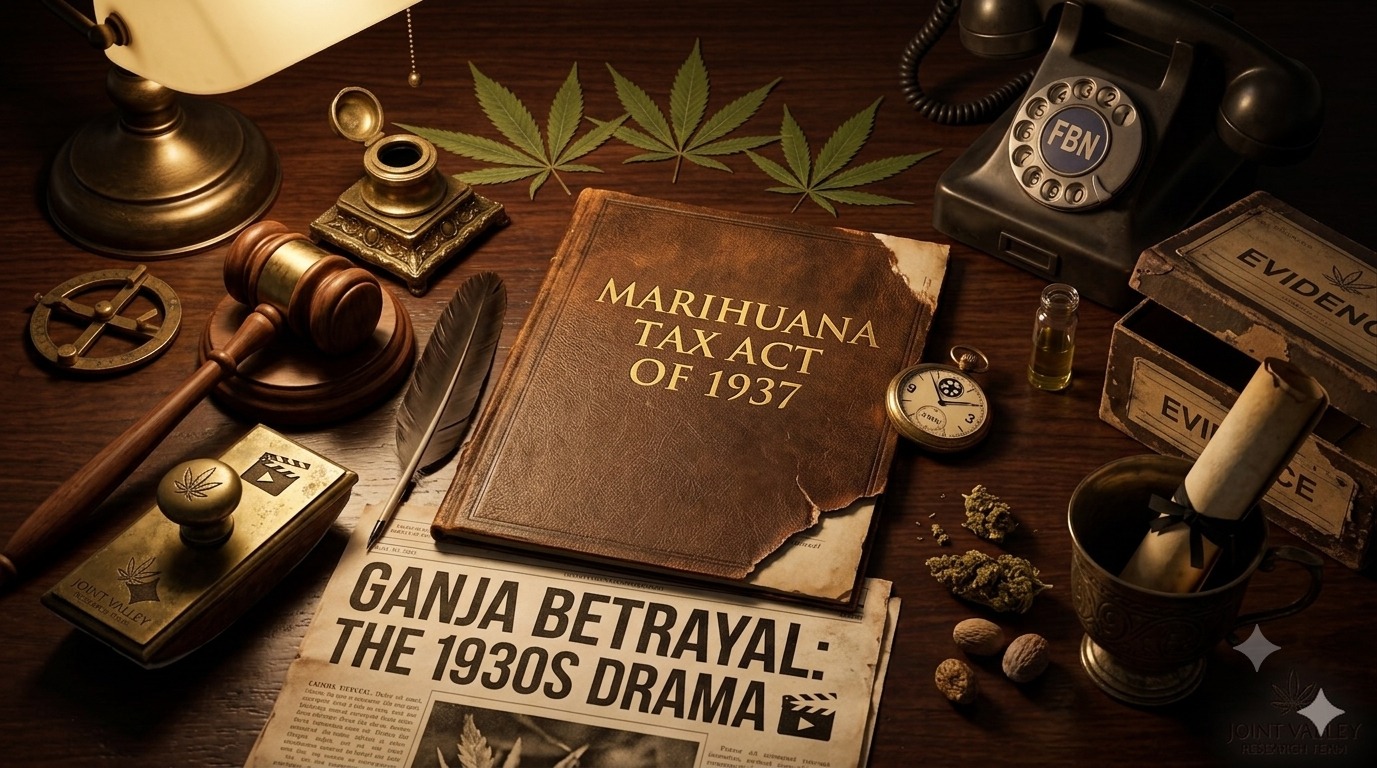
Picture this: A medical superstar loved by ancient emperors is suddenly cornered in a dark alley, targeted by a new government agency, and framed for crimes it didn't commit.
No, this isn't a Hollywood gangster movie. It is the real, fast-paced history of how cannabis was outlawed in the 1930s.
Hold onto your seats, this is the story of the ultimate plant betrayal.
1. The Identity Theft
Our story starts in 1930. The US government created a new department called the Federal Bureau of Narcotics. The bureau had a big problem: it had a large budget but no major enemy to fight. It needed a villain to justify its existence, so it targeted the cannabis plant.
The Trap: Before this, cannabis had a great reputation. It sat peacefully in family medicine cabinets, curing headaches and soothing coughs.
The Twist: The bureau knew it couldn't convince people to hate a medicine they trusted. So, they changed the game. They dropped the word "cannabis" from public campaigns and aggressively used a new, foreign-sounding name: "marijuana."
The Result: The trick worked perfectly. The unfamiliar name made everyday citizens think a dangerous new monster had arrived. It was such a successful trick that when a ban was finally proposed, the American Medical Association showed up furious, realizing at the last second that "marijuana" was just the exact same cannabis they had been prescribing for decades!2. The Fake News Machine
Every movie villain needs a loud megaphone, and the 1930s media was thrilled to play the part. Big newspaper companies were locked in a brutal war for readers, and nothing sold papers faster than pure shock value. At the exact same time, a big rivalry was brewing behind the scenes: the rising industrial hemp industry was threatening to compete with traditional timber-based paper corporations.
The Smear Campaign: Newspapers started pumping out wild, exaggerated front-page stories. Headlines claimed that a single puff of this weed would instantly drive regular citizens into violent madness.
The Movie Panic: The hysteria peaked with the 1936 film Reefer Madness. The movie showed clean-cut students trying a joint once and immediately turning into wild criminals. While audiences today watch it as a hilarious comedy because the acting is so ridiculously bad, back then, it terrified the public.3. The Tax Ambush
By 1937, the trap was set. Policymakers wanted a total ban, but they ran into a wall: the US Constitution didn't give them the legal power to ban a plant outright. So, they used a clever legal loophole called the
Marihuana Tax Act.
The Setup: The government told the public, "Good news! Cannabis isn't illegal. You just have to buy an official government tax stamp to grow or sell it."
The Catch: Here is the punchline, the government simply refused to print or hand out the stamps. If you were caught with the plant without a stamp, you were thrown in jail for federal tax evasion!
The Victim: The biggest casualty was industrial hemp. Even though hemp stalks have practically zero THC and cannot get anyone high, the heavy legal nightmare made it impossible for regular farmers to grow it. A massive, eco-friendly textile industry vanished overnight.The Bottom Line
What started as a calculated legal ambush and media scare campaign in 1930s America quickly triggered a global domino effect. Within a few decades, international treaties forced countries across the globe to follow the same script, turning an ancient crop into a black-market outlaw.
But history loves a good plot twist. Today, the world is finally ripping up the old 1930s script, clearing away the propaganda, and rewriting a brand-new ending for this 10,000-year-old traveler!